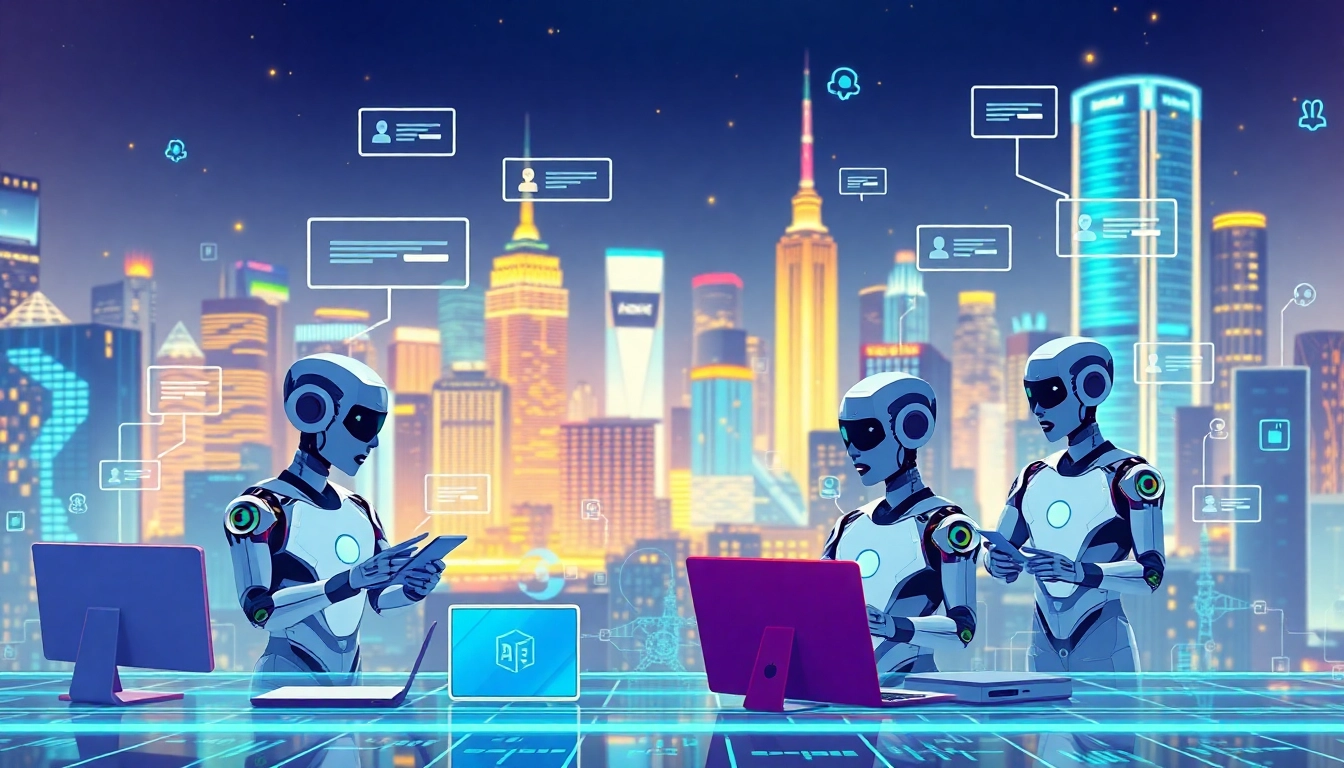
What Are Ai agents?
The concept of Ai agents has emerged as a significant focal point in modern technology. These software systems harness artificial intelligence to perform tasks and solve problems autonomously. Understanding what they are entails diving into their definitions, types, and essential characteristics that make them effective in various contexts.
Definition of Ai agents
In essence, Ai agents are intelligent systems that perceive their environment and act upon it to achieve specific goals. Drawing from the definition provided in the field of artificial intelligence, an intelligent agent is characterized as an entity capable of analyzing input and executing actions autonomously. This could mean automating a routine process, generating insights from data, or even interacting with users through natural language.
Types of Ai agents
Ai agents can be categorized into various types based on their functionalities and areas of application. Some significant types include:
- Reactive Agents: These agents respond to specific stimuli from their environment without keeping a history of past events. They operate primarily on immediate inputs.
- Goal-Based Agents: Unlike reactive agents, these are capable of making decisions based on their objectives. They formulate plans to achieve specific goals.
- Utility-Based Agents: These agents go a step further by assessing the outcomes of their actions based on a set of preferences or utilities, leading to optimal decision-making.
- Learning Agents: These have the capability to learn from their experiences, allowing them to adapt and improve their performance over time.
Characteristics of effective Ai agents
Several key characteristics define effective Ai agents:
- Autonomy: They operate independently without human intervention, making decisions based on predefined algorithms.
- Flexibility: Effective Ai agents can adapt to diverse environments and scenarios.
- Learning: The ability to learn from experiences enables continuous improvement and adaptation.
- Interactivity: They can effectively interact and communicate with users and other agents for enhanced functionality.
- Efficiency: Effective Ai agents perform tasks reliably and within time constraints, optimizing resources.
How Ai agents Operate
The operation of Ai agents rests on various technological underpinnings and methodologies. Understanding their operational processes can provide insights into their effectiveness across different applications.
Underlying technologies for Ai agents
Several technologies enable the development and functioning of Ai agents:
- Machine Learning: This is a core component that allows Ai agents to learn from data, improving their accuracy over time.
- Natural Language Processing (NLP): NLP enables Ai agents to understand and generate human language, facilitating more natural interactions.
- Computer Vision: For agents that interact with visual data, computer vision allows them to interpret and analyze images and videos.
- Robotics: In physical applications, robotics integrates Ai agents into machines that can participate in the physical world.
Decision-making processes of Ai agents
Decision-making in Ai agents can be described as a series of steps:
- Perception: Gathering data from their environment through sensors or data inputs.
- Processing: Analyzing the information to understand the context and requirements.
- Evaluation: Determining the best course of action based on learned experiences or predefined criteria.
- Action: Executing the selected action to achieve the desired outcome.
Interactivity and user engagement with Ai agents
Engagement with users is vital for the success of Ai agents. They must not only perform tasks but also provide a satisfying user experience. This is achieved through:
- Conversational Interfaces: Utilizing chatbots and voice assistants to communicate naturally with users.
- Personalization: Tailoring responses and actions based on user preferences and behaviors.
- Feedback Mechanisms: Allowing users to provide feedback helps agents learn and improve their interactions.
Applications of Ai agents Across Industries
The versatility of Ai agents allows for widespread application across various sectors. Below are examples of how they are transforming industries:
Ai agents in customer service
In customer service, Ai agents are revolutionizing the way organizations interact with customers. Chatbots-equipped systems can handle inquiries, provide information, and resolve issues 24/7.
For instance, using machine learning algorithms, these agents learn from past interactions to provide quicker and more accurate responses. They can handle high volumes of requests simultaneously, reducing wait times and improving customer satisfaction.
Ai agents in healthcare
The healthcare sector benefits significantly from Ai agents, particularly in areas such as patient monitoring, diagnosis support, and administrative tasks. These agents can analyze patient data to assist in diagnosis or remind patients to take their medication.
For example, Ai agents deployed in telemedicine platforms assist in initial diagnoses based on symptoms described by patients, streamlining the process of connecting them with healthcare providers.
Ai agents in finance
In finance, Ai agents are used for risk management, fraud detection, and personalized financial advice. They can analyze massive datasets to spot fraudulent transactions more accurately than traditional methods.
Additionally, robo-advisors utilize Ai agents to provide personalized investment guidance based on market trends and individual client preferences, thereby democratizing access to financial advice.
Challenges and Limitations of Ai agents
Despite the numerous advantages, Ai agents face several challenges that could hinder their effectiveness. Addressing these challenges is crucial for the advancement and acceptance of Ai technologies.
Data privacy concerns with Ai agents
One of the significant issues surrounding Ai agents is data privacy. These systems often require access to sensitive personal data to function effectively. This raises concerns about data security, user consent, and potential misuse of information.
Organizations must ensure compliance with data protection regulations, implementing robust security measures to protect users' information.
Technical limitations of Ai agents
Technical limitations can also pose challenges. Ai agents can struggle with tasks requiring deeper contextual understanding or handling ambiguous user inputs. Limitations in natural language understanding sometimes result in miscommunication with users.
Continuous advancements in machine learning and NLP are essential to bridging these gaps and enhancing the functional capabilities of Ai agents.
User trust and adoption issues
Building user trust in Ai agents is crucial. Many users may be hesitant to rely on automated systems due to skepticism about their accuracy or concerns about job displacement. Ensuring transparency in how Ai agents operate and making them user-friendly can pave the way for broader acceptance.
The Future of Ai agents
The future of Ai agents looks promising, with ongoing advancements in technology. Trends indicate that these systems will become increasingly integrated into our daily lives, fundamentally altering how we interact with technology.
Emerging trends in Ai agents
We are witnessing trends such as the fusion of Ai agents with augmented and virtual reality, enhancing immersive experiences. Moreover, the rise of explainable Ai will help users understand agent functionalities better, fostering trust.
Impact of Ai agents on job markets
While Ai agents can lead to significant job displacement in certain sectors, they also create new opportunities, necessitating different skills and roles. Workforce reskilling will be essential for adapting to these changes.
Predicted advancements in Ai agents technologies
Future advancements in Ai agent technology could include more sophisticated autonomous agents capable of complex reasoning. We may also see broader applications in education, urban planning, and sustainability efforts.
Frequently Asked Questions
What are Ai agents?
Ai agents are autonomous software systems designed to perform specific tasks by processing data, making decisions, and interacting intelligently with their environment.
How do Ai agents learn?
Ai agents learn using machine learning algorithms, which allow them to analyze data, recognize patterns, and improve performance based on past experiences.
What are the main benefits of using Ai agents?
Key benefits of Ai agents include automation of routine tasks, enhanced efficiency, reduced operational costs, and improved decision-making through data analysis.
Can Ai agents operate without human intervention?
Yes, Ai agents are designed to operate autonomously, executing tasks without human oversight, although human guidance may be necessary for complex tasks.
What industries are most impacted by Ai agents?
Industries such as customer service, healthcare, finance, and logistics are significantly impacted, benefiting from automation and improved efficiency offered by Ai agents.