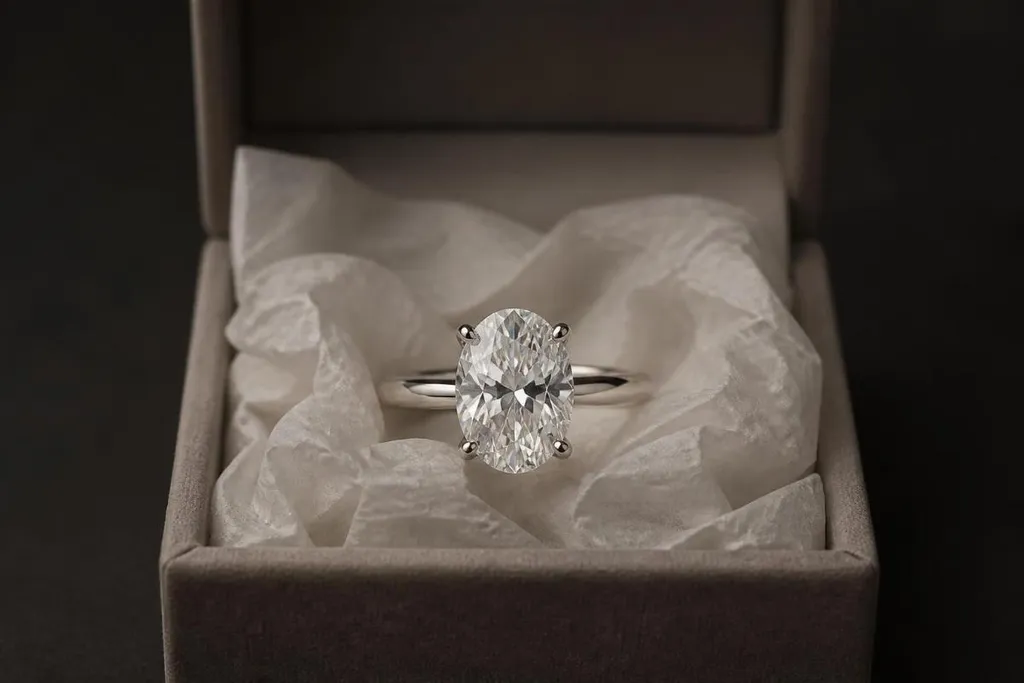
A petite solitaire depends on precision. With no halo or elaborate shoulders to share attention, the centre stone, band and setting must work together convincingly. Pairing an oval lab-grown diamond with platinum is particularly effective because the metal provides a naturally white, understated framework around the stone. The result is refined rather than decorative, allowing the oval silhouette and its brilliance to define the ring.
For someone considering this combination, the option to order the platinum Lulu ring from Lily Arkwright demonstrates why platinum suits a petite solitaire so naturally. Its cool appearance supports the brightness of the lab diamond, while the restrained proportions keep the overall design elegant. It is a combination particularly suited to someone who wants an engagement ring with noticeable presence but minimal visual complication.
Platinum Keeps the Focus on the Diamond
One of platinum's strongest aesthetic qualities is its naturally white appearance. Beside a colourless or near-colourless diamond, this creates a cohesive transition between gemstone and setting.
That matters in a petite solitaire because relatively little metal is visible. Rather than introducing a contrasting colour, platinum allows the eye to move directly towards the diamond. The claws and surrounding structure can appear visually discreet, helping the oval outline remain clear.
This creates a different effect from yellow or rose gold. Warm metals deliberately contrast with a bright diamond and become a noticeable part
of the design. Platinum is more restrained, making it especially suitable for someone who wants the gemstone to provide virtually all of the ring's visual emphasis.
Its appearance also avoids reliance on surface plating to achieve a white finish. Over time, platinum develops a characteristic patina through wear, which some people appreciate as part of the metal's natural ageing process. Professional polishing can restore a brighter finish when preferred.
Why the Oval Shape Works With Petite Proportions
An oval lab diamond provides useful visual length in a design where the band itself is deliberately fine.
The elongated outline extends along the finger rather than concentrating all of its dimensions within a circular shape. As a result, an oval can create a noticeable centrepiece while preserving the light appearance expected from a petite solitaire.
Proportion should be considered carefully. A broader oval gives a fuller, softer look, whereas a higher length-to-width ratio produces a more slender silhouette. The wearer's hand shape and personal preference should guide the decision rather than a single supposedly perfect ratio.
Carat weight is only part of the equation. Two oval diamonds with similar weights may present differently from above because their dimensions and proportions vary.
Someone might choose a larger oval because the solitaire has no additional diamonds contributing to its overall presence. Another wearer may prefer a more restrained centre stone because maintaining delicacy is more important than maximising visual coverage.
Both approaches can work when the centre diamond feels balanced against the fine platinum band.
Platinum Brings Practical Strength to a Fine Design
A petite band may look delicate, but an engagement ring still needs to cope with regular wear. Platinum's physical characteristics make it a particularly compelling precious metal for fine jewellery settings.
It is dense and durable, qualities that are valuable where small amounts of metal must securely support a centre stone. This allows the setting to retain an elegant appearance while still being designed with longevity in mind.
Platinum does mark with wear, so durability should not be confused with remaining permanently pristine. Rather than simply disappearing when scratched, the metal tends to displace, gradually developing its recognisable surface patina.
The setting should still be checked periodically. Claws are small structural components exposed to everyday contact, and professional inspection can identify wear before it compromises security.
Removing the ring during activities likely to involve significant impact or abrasion is also sensible, regardless of how durable the metal or diamond may be.
Pairing the Ring With a Wedding Band
The simplicity of a platinum petite solitaire provides considerable freedom when choosing accompanying jewellery.
A plain platinum wedding band maintains the clean, monochromatic appearance and keeps the oval diamond as the main focal point. A diamond-set band introduces additional brilliance while preserving consistency through the white metal.
Band width deserves attention. A wedding ring that is substantially heavier than the engagement ring can change the balance of the pairing. Similar or complementary proportions usually preserve the refined character of the petite design.
Setting height matters too. The structure beneath the oval diamond determines whether a straight wedding band can sit flush against the engagement ring or whether a shaped band would create a closer fit.
Considering this relationship early can make the eventual bridal set feel intentionally designed rather than assembled as separate pieces.
Final Thought
Platinum complements a petite oval lab diamond solitaire because it contributes without competing. Its naturally white appearance supports the brightness of the centre stone, while its density and durability suit a design built around fine proportions.
Combined with the graceful length of an oval lab diamond, platinum creates an engagement ring that feels restrained but never insignificant. For someone drawn to clean lines, cool tones and jewellery designed for long-term wear, the pairing offers a particularly convincing interpretation of modern solitaire elegance.